



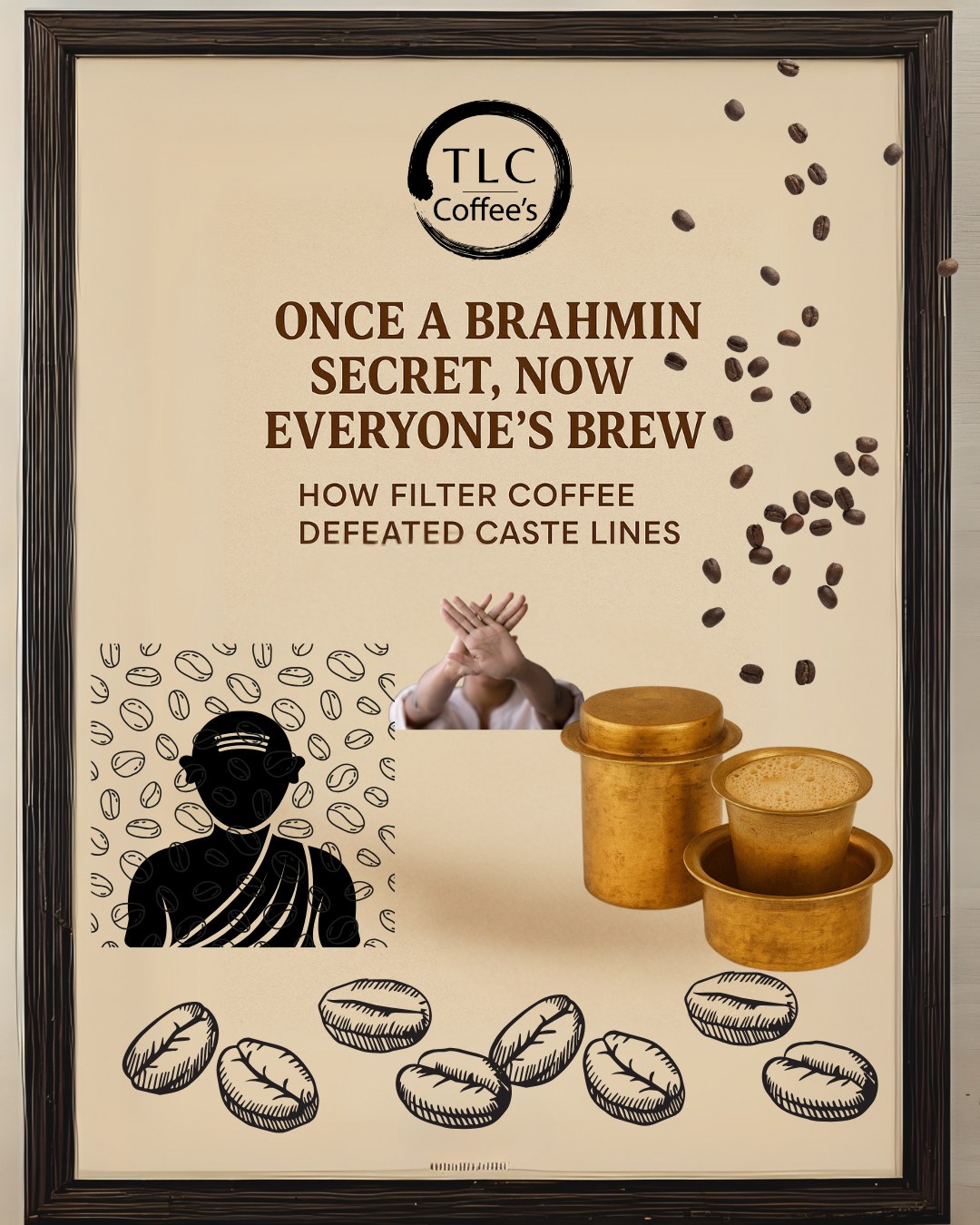
Filter coffee today is everywhere—in homes, on trains, in hipster cafés and street stalls. But few know this truth: it wasn’t always for everyone.
For decades, this beloved South Indian brew was locked behind the kitchen doors of upper-caste privilege—a sacred ritual for the few, forbidden for the many.
This is the story of how filter coffee broke caste barriers, spilled into the streets, and became the drink of the common man.
☕ When Coffee Meant Caste
In the 1800s, when coffee first took root in South India, it didn’t brew in every home. It was a status symbol—steeped in ritual, measured in purity, and brewed with exclusivity.
- The Brahmin elite—particularly the Iyers and Iyengars—turned coffee into a morning sacrament.
- Filtered through brass, served in silver tumblers, and sipped in silence, it was as much about refinement as it was about reinforcement.
- For lower castes, access was denied. Even in public spaces, if they were served at all, it was often in separate cups.
Coffee wasn’t just a drink. It was a line you couldn’t cross.
🔥 The Quiet Rebellion Brews
But just like the decoction itself—slow, dark, and persistent—change began to percolate.
🚩 Social Movements Rise
- The Dravidian movement in Tamil Nadu challenged Brahminical control over rituals and public life.
- Leaders called out the absurdity: How could something as simple and human as coffee belong only to the privileged?
🏙 The City and the Coffee Hotel
- As cities grew, so did hunger—for food, for freedom, and for coffee.
- Tiffin rooms and coffee hotels opened their doors to clerks, rickshaw pullers, schoolteachers, and shopkeepers.
- For the first time, coffee became democratic—served in steel tumblers, without surnames.
🚂 The Platform Revolution
- Railway stations became melting pots. A single coffee vendor served everyone—no filters, no barriers.
- Street-side stalls began offering kaapi for 1 rupee, served with gossip, warmth, and zero judgement.
It wasn’t loud. It wasn’t violent. But it was a revolution—driven by those who were never supposed to taste that sacred brew.
🌊 Mangalore’s Role in Brewing Change
In Mangalore, the coastal air carried not just salt—but defiance.
- Catholic homes added their twist with sweetened milk coffee.
- Tuluvas, Bearys, Konkanis—all began owning the ritual.
- No brass filter? No problem. They made do with cloth sieves and shared tumblers.
In these kitchens, filter coffee became what it was meant to be: a comfort, not a caste code.
✊ From Caste to Common Cup
Today, when you sip a hot tumbler of filter coffee, know this:
- You’re drinking what was once denied to millions.
- You’re honoring the working hands that stirred the decoction, the rebel minds that challenged the hierarchy, and the communities that reclaimed the cup.
Filter coffee has won—not by dominating, but by belonging to everyone.
At TLC Coffees, we don’t just brew beans—we brew stories of resilience. From the Spartan Brew of Mysore’s rugged hills to our Mysore Blend that echoes old-world charm, every cup is a tribute to the people who made coffee their own.


